

Switzerland has come to an arrangement with the EU on stabilising the agreement on agriculture and, in addition to its further development, on a new protocol on food safety. The protocol offers significant advantages for the Swiss food industry, for plant and animal health, and for consumer protection. This is thanks to the establishment of a common food safety area.
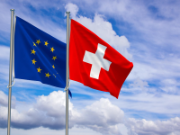
The EU is Switzerland’s most important trading partner. Agricultural products and foodstuffs worth over 16 billion Swiss francs are traded between Switzerland and the EU every year, with 50% of Swiss exports in this sector going to the EU, and 74% of imports originating from the EU.
The advantages of the Swiss-EU food safety protocol
A common food safety area strengthens cooperation between Switzerland and the EU along the entire food supply chain: the safety of agricultural products and foods in mutual trade is guaranteed in the long term, and consumer protection and the prohibition of misleading practices are strengthened.
- Trade: facilitated market access
The further removal of non-tariff trade barriers (i.e. trade restrictions that are not customs duties) will facilitate mutual market access for food producers, meaning that Swiss businesses can continue to export their products to the EU easily. Swiss consumers will have a broad range of foods available from Switzerland and from neighbouring countries. - Food safety: enhanced consumer protection and ban on misleading practices
Switzerland will gain access to the relevant EU networks and working groups, including the European Food Safety Authority (EFSA), EU risk assessments and EU early alert systems. Switzerland will also be included in the EU system for the authorisation of plant protection products. It has also been agreed that the obligation to indicate the country of origin will remain in place for foods sold in Switzerland. Joint efforts to combat counterfeiting and fraud will offer the Swiss food industry greater protection and thereby strengthen consumer protection. - Animal health: further harmonisation in combating animal diseases
Closer cooperation between Switzerland and the EU strengthens the joint fight against animal diseases that can potentially be transmitted to humans and cause major economic damage. It also strengthens the joint commitment to combating antibiotic resistance.
Protecting progress made:
- Sovereign agricultural policy
Switzerland will continue to shape its agricultural policy independently. This means that it will make its own decisions about agricultural policy, for example on agricultural laws and subsidies for farmers. Border protection (customs duties and quotas) for agricultural products will remain unchanged. - Genetically modified organisms (GMO)
The Swiss regulations on GMO in feed, seed and foodstuffs will remain unchanged. - Animal welfare
Switzerland’s high animal welfare standards will continue to apply. The domestic ban on animal transit on Swiss roads will be secured in the long term through an exemption.
Most frequently asked questions on the EU food safety protocol
Most frequently-asked questions on the authorisation of plant protection products with the Swiss-EU package
- What is changing for consumers?
The common food safety area will provide even better protection for food consumers in international online and offline trade. Switzerland will obtain full access to the EU rapid alert system and to real-time data on potential risks, such as unsafe products on the market, so that it can respond swiftly. This will improve the protection of human health along the entire food chain.
- What is changing for food businesses?
There will be no noticeable changes for Swiss food businesses as over 90% of Swiss food legislation is already aligned with EU law. For example, equivalent regulations apply in Switzerland on hygiene and on food safety, such as identical maximum levels for pesticide residues.
- Will there be stricter rules for very small suppliers such as market vendors, club events and farm shops (occasional sale of food)?
No. Nothing will change in practice for farm shops, market vendors and club events. While they are subject to Swiss food laws and must therefore meet the hygiene requirements and ensure product quality, both Swiss and EU law set out relaxed rules for the so-called “direct or occasional” sale of foodstuffs. So there will be no change to the current situation.
- Will EU officials carry out checks in Swiss businesses?
No. Checks carried out in food businesses in Switzerland are, and will continue to be, performed by the cantonal authorities, not the EU. The European Commission already conducts audits in the scope of the existing agriculture agreement – both in Switzerland and in other third countries. These audits aim to check whether a country’s food safety control systems are properly implemented.
- Will Swiss animal welfare standards be relaxed?
No. Switzerland will retain its strict requirements. Its high animal husbandry standards will also continue to apply. Key exemptions will remain in place, in particular the domestic ban on animal transit on Swiss roads.
- Will genetically modified foodstuffs be imported into Switzerland?
Switzerland was able to negotiate an exemption with regard to genetically modified organisms (GMOs). This means as is currently the case, genetically modified foodstuffs authorised in the EU will not automatically be licensed in Switzerland Instead, there will continue to be a Swiss authorisation procedure. For example, several varieties of genetically modified rapeseed are authorised in the EU, for the manufacture of rapeseed oil, among other things. In Switzerland, however, no genetically modified rapeseed varieties are authorised.
- Will dangerous pesticides be used in Switzerland that are currently banned?
No. The Swiss licensing requirements for plant protection products are already virtually identical to those of the EU. The same requirements apply with regard to safety and effectiveness, which is why no plant protection products will be placed on the Swiss market in future that would not be authorised today. The national authorisation procedure and the regulation of product use will continue to take place in Switzerland. It will therefore continue to issue its own requirements and restrictions, for example with regard to waters protection and health. The provisions on Swiss waters protection remain unaffected.
- What would change in terms of the authorisation of plant protection products?
With the food safety protocol, Switzerland will be fully integrated into the EU authorisation system. This means that it will be able to fully inspect risk assessments, contribute its opinion on the evaluations of plant protection products, benefit from the knowledge of around 2,000 experts in the EU Member States, and take the lead in evaluations. In future, it will be able to authorise plant protection products from the EU’s “Central” zone that it has co-evaluated without delay at the national level. Agricultural producers will thus have faster access to modern, effective products. There is no obligation to adopt the authorisations from the EU. Adoption of authorisations can be waived if human, animal or environmental protection is not guaranteed or if the Swiss waters protection requirements are not met.
- Will authorisation of plant protection products proceed faster in future?
Yes, authorisation will proceed faster, because Switzerland will be able to authorise plant protection products that it has co-evaluated without delay at the national level. The safety and effectiveness of the products remain at the same level, since the authorisation requirements in Switzerland and the EU are virtually identical.
- Will dangerous pesticides that are currently banned be used in future in Switzerland?
No. The Swiss licensing requirements for plant protection products are already virtually identical to those of the EU. The same requirements apply with regard to safety and effectiveness, which is why no plant protection products will be placed on the Swiss market in future that would not be authorised today. The national authorisation procedure and the regulation of product use will continue to take place in Switzerland. It will therefore continue to issue its own requirements and restrictions, for example with regard to waters protection and health. The provisions on Swiss waters protection remain unaffected.
- Is it true that Switzerland will have to adopt all pesticides from other countries in future?
No. Switzerland will be able to authorise without delay and at the national level plant protection products that it has co-evaluated from the EU’s “Central” zone. Agricultural producers will thus have faster access to modern, effective products. There is no obligation to adopt the authorisations. Adoption of authorisations can be waived if human, animal or environmental protection is not guaranteed or if the Swiss waters protection requirements are not met.
- Will Swiss waters protection standards be relaxed?
No. Swiss waters protection requirements, including the protection of drinking water, will remain unchanged. Switzerland will continue to check plant protection products in line with the waters protection requirements and will not authorise products – or will authorise them with restrictions – if the requirements are not met. This is also the case in Germany and Denmark, for example, whose waters protection requirements are similarly strict to those in Switzerland. The EU requirements explicitly provide for this (Article 36, EU Plant Protection Product Regulation 1107/2009).
- Will Swiss health protection requirements be relaxed?
No. The change concerns the process for authorising plant protection products, not the safety requirements (see 7). The authorisation requirements and the provisions for health protection will remain just as stringent as they are today. Switzerland will be able to issue restrictions on plant protection products in future, for example, requirements on mandatory protective clothing. It can also reject plant protection products altogether if health protection is not guaranteed. The EU requirements explicitly provide for this (Article 36, EU Plant Protection Product Regulation 1107/2009).
- How does the new authorisation process work with the EU food safety protocol?
In future, Switzerland will be part of the EU “Central” authorisation zone. When evaluating authorisation applications, a country in this zone takes the lead, e.g. Germany, Austria or Belgium. Switzerland’s legal provisions must be taken into account from the outset, in particular in terms of groundwater protection. All countries in the zone, including Switzerland, contribute their expertise to the scientific evaluation of the application. On the basis of the consolidated evaluation, Switzerland can then authorise a plant protection product without delay at the national level. It can also refuse it, if human, animal or environmental protection is not guaranteed. In terms of waters protection, it will conduct its own checks in future and may not authorise a particular product – or may do so but only subject to restrictions. As in the past, Switzerland will issue specific requirements for the use of plant protection products, such as the maximum permitted number of applications per year, distance to watercourses or provisions on protective clothing.
- Will new active substances for plant protection products be available more quickly in Switzerland?
Switzerland already adopts the approval of active substances from the EU. Specific conditions and restrictions for Switzerland are also possible with the food safety protocol, for example, in terms of protecting watercourses. Active substances that are no longer permitted in the EU will, in return, also no longer be permitted in Switzerland, with immediate effect. This safeguards the supply of organic and conventional plant protection products for agriculture, and puts Swiss producers on an equal footing with those from neighbouring EU countries.
More information
Last modification 05.12.2025


