
Maximum levels for vitamins and minerals in foods
The permitted maximum levels for vitamins and minerals in foods aim to protect public health. The model is based on the latest scientific evidence and considers the total intake of a nutrient.
The previous maximum levels were based on the daily requirement for a nutrient. The current model is guided by public health considerations and is based on the latest scientific evidence. It considers the tolerable upper intake levels (ULs) and takes into account the intake via the normal daily diet, via fortified foods and via food supplements or foods for athletes.
For these different food categories, nutrients are divided into four groups – from non-critical substances, to critical substances with maximum levels, to substances for which maximum levels and warning labels are required.
The maximum level model in detail
The FSVO’s maximum level model is based, among other things, on the publication by the German Federal Institute for Risk Assessment ‘Maximum levels for vitamins and minerals in food supplements’ (in German; 2018).
The aim of the model is to ensure that the tolerable upper intake level (UL) for each nutrient is not exceeded. To this end, the basic intake (BI) via the normal daily diet is deducted from the UL. The remaining ‘residual amount’ (UL - BA) is available for fortified foods and food supplements or foods for athletes.
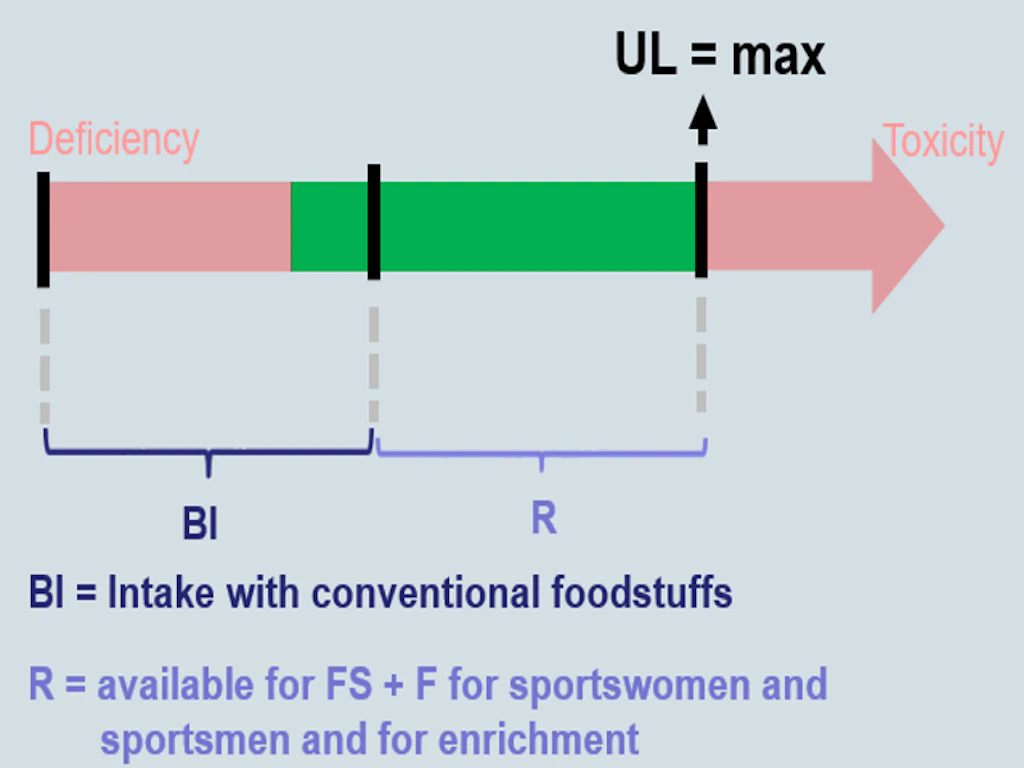
Distribution of the residual amount (UL- BA)
For the distribution of the residual amount, the substances were divided into four groups:
- Group 1: non-critical substances, for which no maximum level will be set.
- Group 2: substances with a large residual amount (low risk of exceeding the UL).
- Group 3: substances with a small residual amount (high risk of exceeding the UL).
- Group 4: substances for which adverse effects or interactions may occur at medium-low dosages or above; vitamin K and magnesium fall into this group.
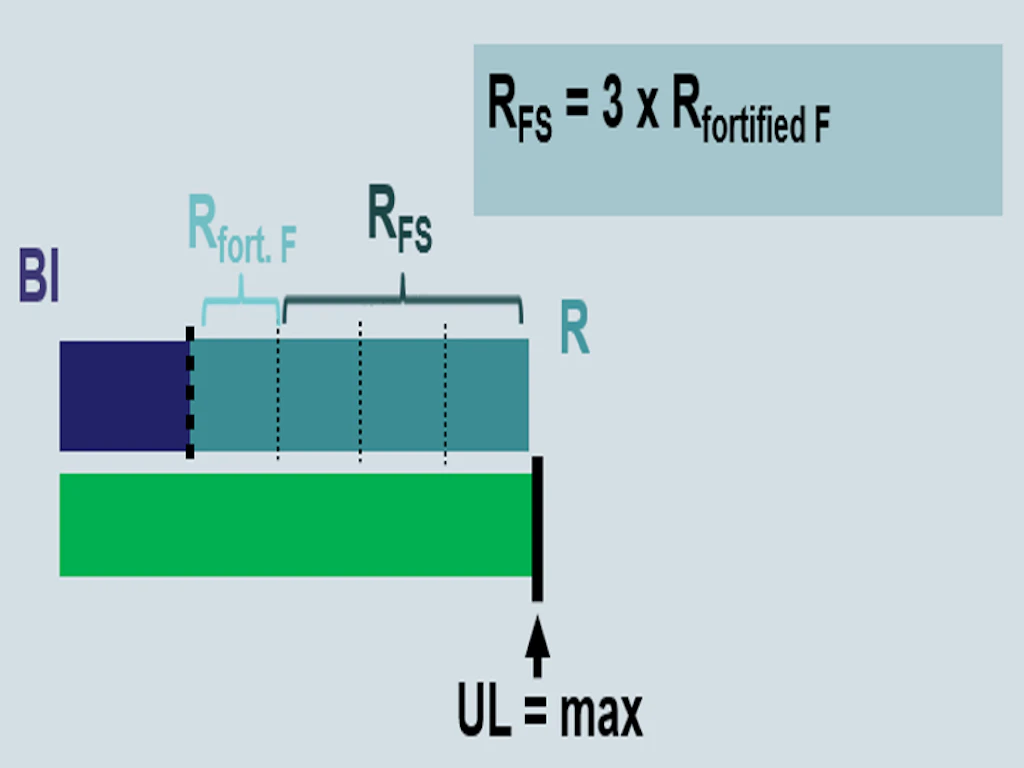
For groups 2 and 3, the residual amount is distributed between fortified foods and food supplements or foods for athletes in a ratio of 1:3. This ensures that fortified foods contain a significant amount of a nutrient in the daily ration, while food supplements represent a concentrated form of a nutrient.
For group 4, the maximum levels for fortified foods are set below the threshold for warning labels. In the case of food supplements and foods for athletes, the previous levels still apply, provided that – above a specified dosage – the relevant warnings are displayed.